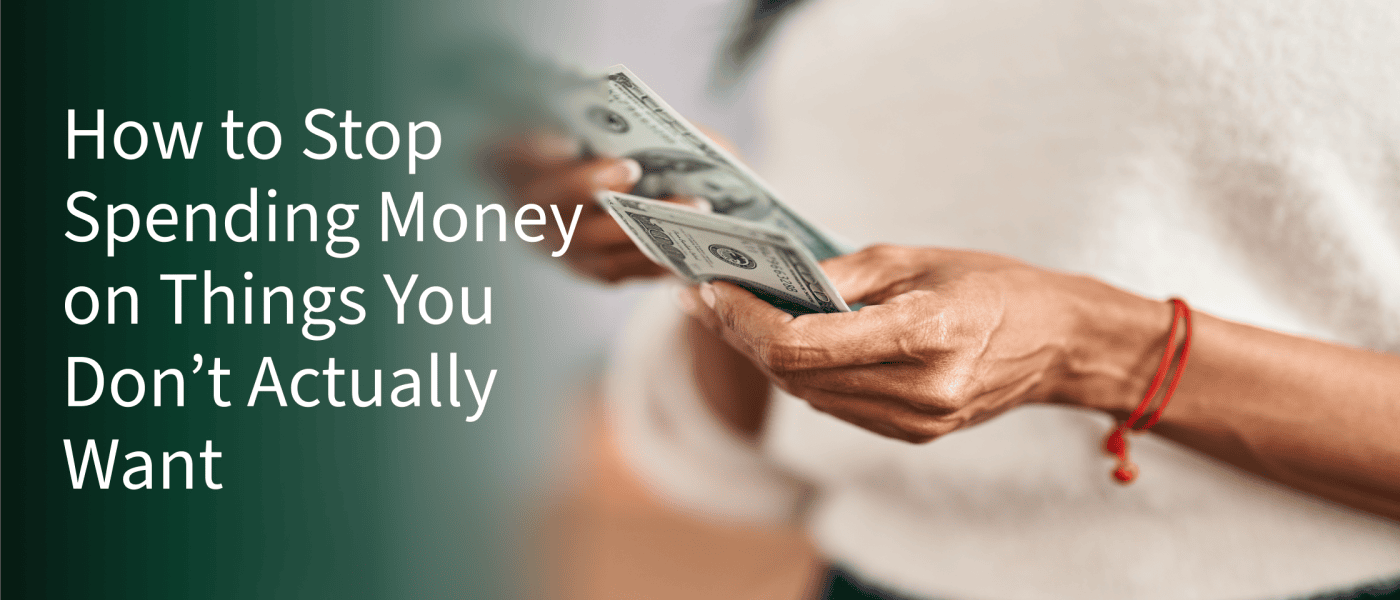
How to Stop Spending Money on Things You Don’t Actually Want

Most overspending isn’t about buying things people want. It’s about buying things that seemed desirable in the moment—then turned out not to be. People consistently overestimate how much satisfaction a future purchase will deliver. The gap between anticipated pleasure and actual use is visible in every closet with clothes that haven’t been worn, every kitchen drawer with gadgets still in the box, and every subscription that stopped being opened months ago.
The problem isn’t willpower. It’s the environment purchases happen in—and the gap between how spending feels at the moment of decision vs. how it feels three weeks later. Both are manageable without restriction.
Why Purchases Feel Better Before You Make Them
The brain’s reward system responds to anticipation more strongly than to the actual experience. A study published in Neuron found that dopamine—the neurotransmitter associated with reward—spikes most strongly during anticipation, not during the reward itself. A purchase feels exciting in the cart. In the house, it’s just a thing.
Retailers design around this. Frictionless checkout removes the pause that might otherwise create doubt. Flash sales and countdown timers create urgency that feels like scarcity. Free shipping thresholds add items to carts that wouldn’t have been added otherwise. The environment of online shopping is specifically built to capture spending before the anticipation fades.
The result: Americans make an average of 156 impulse purchases per year totaling roughly $5,400 annually. Most of those purchases produce significantly less satisfaction than expected.
The Gap Between Wanting and Using
The most reliable way to spot low-value spending: look at use, not intent. Wanting something and using it are different things. The gap between them is where a lot of money goes.
Subscriptions make this clear. The average household pays about $219 per month while estimating their own total at $86—C+R Research. Not dishonesty—inattention. Services pile up quietly.
The same pattern shows in clothing, kitchen gear, gym memberships, and hobby equipment. The purchase feels like use. The item then sits. A simple 30-day review of what was bought and whether it got used reveals more than most people expect.
Add Friction to Reduce Automatic Spending
Friction is any step that creates a pause between the impulse to buy and the act of buying. Every added step reduces the likelihood of completing the purchase—not because the item is less desirable, but because the pause allows the anticipation to cool.
Remove Saved Payment Information
Requiring the manual entry of a card number before completing a purchase adds roughly 30 seconds of friction. Research from the Kellogg School of Management found that the effort required to complete a transaction significantly predicts whether it gets completed. One-click purchasing dramatically increases spending on items that would have been abandoned under any other checkout process.
Use a Waiting List Instead of a Cart
Instead of adding an item to a cart, put it on a list — a notes app, a wishlist, a saved email. Set a timer for 48 hours or a week. If it still seems worth buying after the wait, buy it. Most things on waiting lists never get purchased. The urgency fades.
This is the mechanism behind the 30-day rule popularized in personal finance research—CFPB resource. A waiting period converts emotional urgency into a rational evaluation. Items that pass the wait tend to be the ones that actually get used.
Unsubscribe From Retail Marketing
Promotional emails generate purchases that wouldn’t happen without them. A sale in the inbox creates a problem—the urge to save money—that didn’t exist before the email arrived. Unsubscribe and the prompt disappears. The item is still there if the need is real.
Retargeting ads work the same way—studies show a 70% lift in conversions from ads that follow a viewed product. Remove the ads, remove the pull.
Audit What You Already Have
Before any purchase, ask: does something already owned do the same job? Most households have duplicates — items bought twice, or items bought to solve a problem an existing one could have handled.
A quarterly review of subscriptions and recurring charges frees money fast. Go through three months of statements. List every recurring charge. Cancel anything unused in the last 30 days. For most people, that’s $50 to $100 per month back—with no change in daily life.
Research on subscription cancellation found people rarely cancel services they don’t use—inertia keeps them active. The audit makes cancellation a deliberate step instead of something that never happens.
Spend on Experiences, Hold Off on Things
Research by Thomas Gilovich at Cornell found that experiences—travel, meals, activities—produce more lasting satisfaction than objects at the same price. The experience becomes a memory. The object fades.
The same budget directed toward fewer, more deliberate purchases and more experiences tends to produce more satisfaction over time.
Before buying something, ask: would the same amount spent on an experience feel better in six months? The question doesn’t need an answer every time. Asking it shifts spending toward what lasts.
The 24-Hour Rule for Online Shopping
Add the item to the cart. Don’t check out. Close the tab. Return after 24 hours. If the item is still in the cart and the desire to buy it is still present—not just the memory of wanting it—complete the purchase.
Most items don’t survive this filter. The desire was a response to the presentation of the product: the good photos, the description, the context of browsing. Returning to the item cold, without that presentation, often reveals that the desire was situational. Some items do survive the wait—those tend to be the ones that actually get used.
Online retailers understand this. Cart abandonment rates average 69.8% globally—Baymard Institute research. Most people who add items to carts don’t complete the purchase. The 24-hour rule systematizes what many people do instinctively.
Bottom Line
Most regret-spending happens fast, in an environment built to skip the pause. The fix is friction—a gap between impulse and action. Remove saved card details. Use a waiting list. Unsubscribe from store emails. Audit subscriptions quarterly. What survives those steps tends to be worth buying.
Disclaimer
This article is for informational purposes only and does not constitute financial advice. Individual situations vary. Consult a licensed financial advisor before making major financial decisions.

Sarah Mitchell
Sarah Mitchell, CFA Sarah spent eight years as an investment analyst before turning her attention to helping everyday Americans build wealth. She holds a CFA charter and writes about portfolio construction, retirement planning, and the math behind long-term financial independence. Her approach is rooted in data, not hype — she believes the best financial advice is boring, repeatable, and backed by numbers. When she's not writing, she's stress-testing her own retirement spreadsheet for fun.