How to Protect Your Money From Inflation

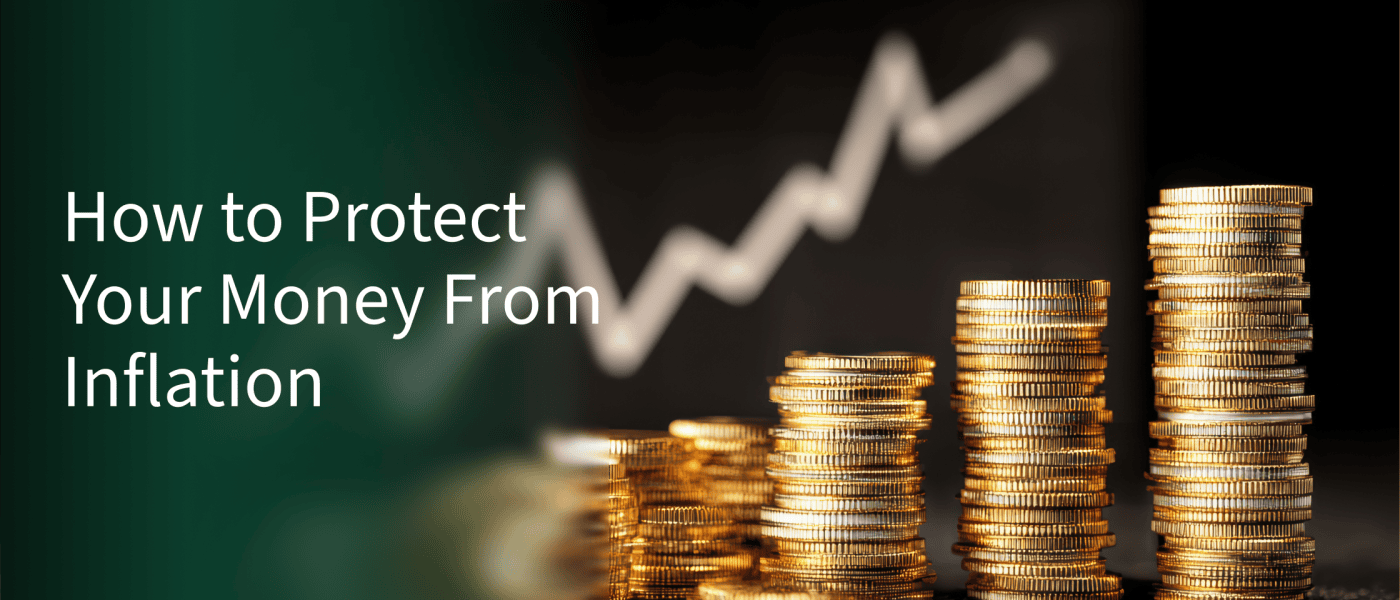
Inflation doesn’t show up as a charge on a bank statement. It shows up as a grocery bill that’s higher than last year, a rent increase that outpaces the raise, a savings balance that buys less than it did. The Bureau of Labor Statistics tracks the Consumer Price Index—the broadest measure of what things cost. At 3% annual inflation, $10,000 in a standard savings account earning 0.5% loses roughly $250 in purchasing power over the year. The balance grows nominally. What it can actually buy shrinks.
This isn’t a guide about getting rich or picking winning investments. It’s about the practical steps available to most people—with any income level—to keep their money from quietly losing ground.
Start With the Savings Account
The first and most accessible move: put idle cash somewhere that pays more than 0.5%. The FDIC national average savings rate is 0.46% APY. Online high-yield savings accounts at Ally, Marcus, SoFi, and similar institutions currently pay 4.5 to 5.0% APY. On $15,000, that’s the difference between earning $69 and earning $675 to $750 per year. Both accounts carry identical FDIC protection up to $250,000. The only difference is where the account is held.
A high-yield savings account doesn’t beat inflation every year—rates are variable and follow the Federal Reserve’s benchmark rate. When the Fed cuts rates, these accounts pay less. But at current rates, they’re one of the few places where cash earns more than inflation takes. The emergency fund, the short-term savings, the money parked between uses—all of it belongs here rather than at a traditional bank paying a fraction of a percent.
One caveat worth stating plainly: these rates won’t last indefinitely. The Federal Reserve’s rate decisions determine the ceiling on what savings accounts can pay. When the Fed begins cutting rates—as it has historically done after a period of elevated rates—high-yield savings accounts follow. The window to capture 4.5 to 5.0% APY on cash is available now. It won’t be indefinitely.
I-Bonds: Built to Track Inflation
Series I bonds are government bonds with a rate tied directly to inflation. Every six months the rate resets—up when prices rise, down when they ease. The rate adjusts each May and November.
The annual purchase limit is $10,000 per person through TreasuryDirect, plus up to $5,000 more using a tax refund. There’s a 1 year minimum hold—the bond can’t be cashed before that. Selling before 5 years means giving up 3 months of interest.
What I-bonds don’t do: outperform inflation. What they do: move with it. The balance in real terms holds steady rather than losing ground. For money sitting unused for at least a year, that’s a more useful property than it sounds—most savings accounts don’t offer it.
TIPS: Inflation Protection for Larger Balances
TIPS work like I-bonds with one key difference: they’re held through a brokerage account and trade like regular bonds. The principal adjusts with the Consumer Price Index—when prices rise, the face value rises with them, and the interest payments follow. Terms run 5, 10, or 30 years.
TIPS have a practical minimum—they work best in larger amounts because the price volatility in secondary markets can erode the inflation protection if a position is sold before maturity. For someone with $50,000 or more in savings looking for a multi-year inflation hedge, TIPS are worth understanding. For smaller amounts or shorter timelines, an I-bond or high-yield savings account is more appropriate.
Pay Down Variable-Rate Debt
Paying down a credit card balance at 21.47% produces a guaranteed 21.47% return on every dollar applied—Federal Reserve data puts the average credit card rate at 21.47% in 2024. No investment available at that return with that certainty. In an inflationary environment where the cost of everything is rising, eliminating the cost of high-rate debt produces a larger immediate benefit than any savings product.
Variable-rate debt is the specific category to focus on. A fixed-rate mortgage at 3.5% signed in 2021 benefits from inflation—the debt is being repaid in dollars worth slightly less each year, while the property securing it typically appreciates. A credit card at 21.47% or a home equity line of credit at a floating rate does not benefit from inflation. It accelerates alongside it.
The priority: clear variable-rate debt at double-digit rates before worrying about which savings product to optimize. The guaranteed return of debt elimination outperforms any available savings or investment option when the debt rate is above 8 to 10%.
CDs
A certificate of deposit locks money at a fixed rate for a fixed period. Current 12-month CD rates at competitive institutions run 4.5 to 5.5%—FDIC rate comparison. Unlike a high-yield savings account, the CD rate doesn’t move when the Fed cuts. Money locked in at 5.0% for 12 months earns 5.0% for 12 months regardless of what happens to rates during that period.
The trade-off: the money isn’t accessible without an early withdrawal penalty—typically 60 to 180 days of interest depending on the term and the bank. CDs work for money that won’t be needed until the maturity date. Emergency funds and money with uncertain timelines belong in a liquid high-yield savings account instead.
CD laddering—splitting the money across 3, 6, 9, and 12-month CDs—keeps one portion maturing every quarter while longer-term CDs earn the higher rate. This provides regular access to a portion of the funds while locking in the current rate environment across the full balance.
Index Funds for the Long Term
For money with a five-year or longer horizon, broad stock market index funds have historically outpaced inflation by a wide margin. The S&P 500’s average annual return since 1957 is approximately 10.5%—Macrotrends data. At 3% inflation, a 10.5% nominal return produces a real return of roughly 7.5%. That’s the difference between $10,000 growing to $27,000 in 10 years at inflation and $10,000 growing to $10,000 adjusted—or $27,000 nominally.
The condition: this works over long periods. Over one to three years, stock markets can lose 20 to 40% and stay down. Money needed within five years doesn’t belong in the stock market. The inflation protection that index funds provide is real—but it comes with volatility that short-term money can’t absorb.
The practical starting point: a total market index fund at Vanguard (VTSAX), Fidelity (FZROX), or Schwab (SWTSX) with an expense ratio under 0.05%. Morningstar’s fund data tracks expense ratios across all major funds. At 0.03% vs. 1.0%, the cost difference on a $50,000 investment over 30 years runs into tens of thousands of dollars.
Options at a Glance
| Option | Current Yield / Benefit | Best For |
| High-yield savings | 4.5–5.0% APY | Emergency fund, short-term cash |
| I-bonds (Treasury) | Tied to CPI—adjusts every 6 months | Long-term inflation hedge; 1-year minimum hold |
| TIPS (Treasury bonds) | Fixed rate + CPI adjustment | Larger balances; inflation-linked income |
| Pay down variable debt | Equivalent to the debt’s interest rate | Anyone with credit card or HELOC balances |
| 12-month CD | 4.5–5.5% fixed rate | Known timeline; guaranteed rate |
| Total market index fund | Historically 10%+ annually (long term) | 5+ year horizon; accepts short-term volatility |
Savings and CD rates from FDIC national averages. I-bond and TIPS rates from TreasuryDirect. Stock market return from Macrotrends S&P 500 data. All rates are subject to change.
Bottom Line
Inflation takes money from people who leave it sitting in low-yield accounts. The countermoves are straightforward: move idle cash to a high-yield savings account, lock in today’s rates with a CD before they fall, use I-bonds for money that won’t be needed for a year, pay down any variable-rate debt above 10% first, and invest money with a long enough horizon in a broad index fund. None of these require financial expertise. All of them are available at any income level. The one move that costs the most is doing nothing while the purchasing power quietly erodes.
Disclaimer
This article is for informational purposes only and does not constitute financial or investment advice. Rates and returns change frequently. Consult a licensed financial advisor before making investment decisions.

Sarah Mitchell
Sarah Mitchell, CFA Sarah spent eight years as an investment analyst before turning her attention to helping everyday Americans build wealth. She holds a CFA charter and writes about portfolio construction, retirement planning, and the math behind long-term financial independence. Her approach is rooted in data, not hype — she believes the best financial advice is boring, repeatable, and backed by numbers. When she's not writing, she's stress-testing her own retirement spreadsheet for fun.